
/ materials /
How much gravel or topsoil do I need? Start with these measurements
Use length, width and depth to describe your gravel or topsoil project, understand volume units, and prepare a clearer material enquiry.
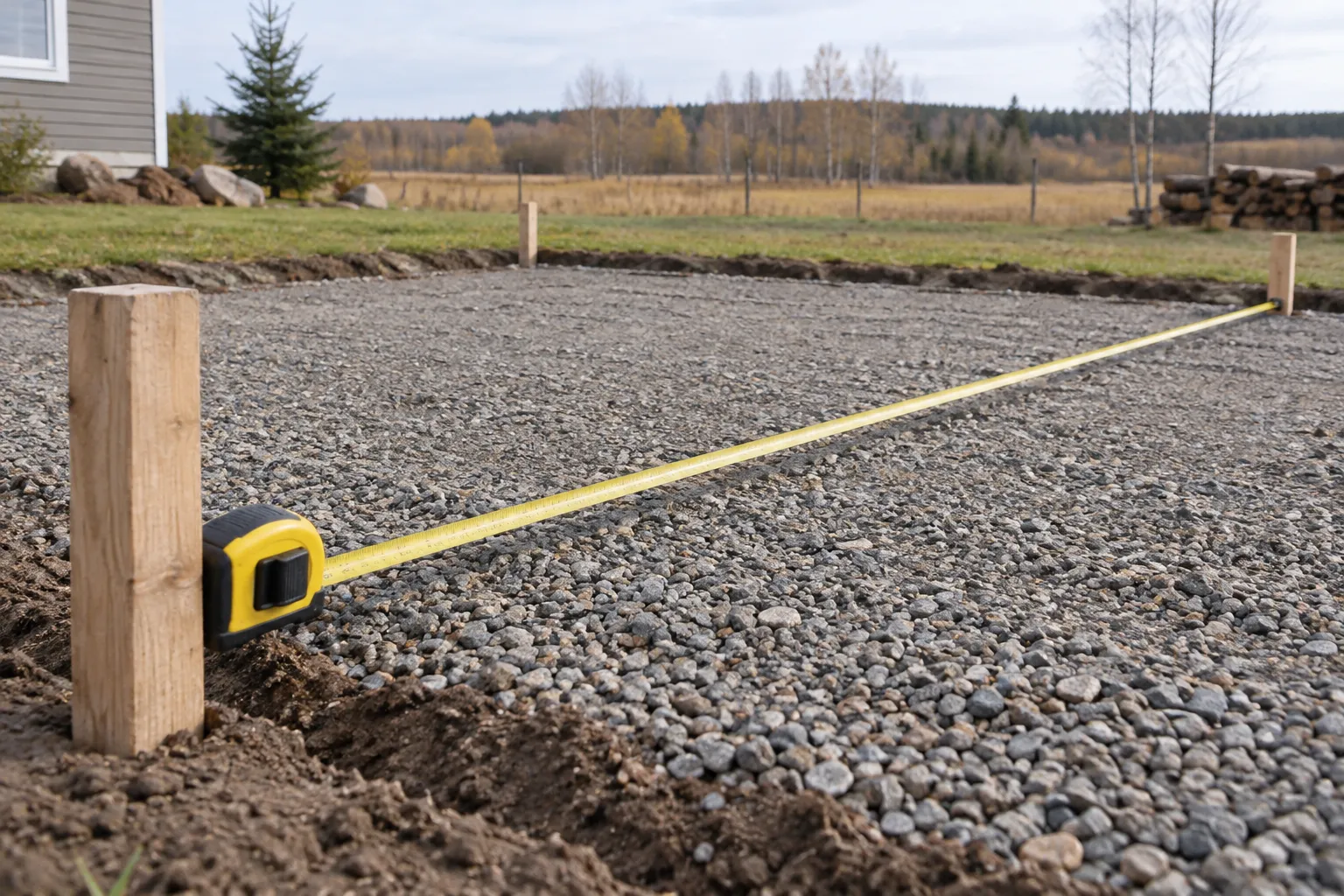
“I need a load of gravel” is a reasonable way to begin a call. The next useful question is where that load is going. A few measurements make it easier to discuss the quantity without relying on a truckload as a unit of area.
You do not need to finish every calculation before contacting dispatch. If you have a location, project description and approximate dimensions, we can start there.
Keep the measurements in the same units
For a rectangular area, volume is length multiplied by width multiplied by depth. Use the same unit for all three measurements before multiplying.
For example, an area 10 metres long and 3 metres wide with a proposed depth of 0.1 metres has a geometric volume of 3 cubic metres. This is an arithmetic example, not a recommended driveway depth or a final order quantity.
For an irregular space, break the plan into smaller rectangles and discuss those dimensions. State which areas are estimates. A sketch can explain a shape more clearly than a single total.
Volume and weight are different
Cubic metres and cubic yards describe volume. Tonnes describe weight. Converting a volume to a delivery weight depends on the material and its condition. Do not assume every gravel or soil product has the same conversion factor.
Also explain whether the depth you mean is before or after placement and compaction. Final ordering allowances should be discussed for the actual material and job rather than added as a universal percentage.
Separate the material from the work
A fresh layer on an established surface is different from filling a deep area or building a new base. Tell dispatch if you expect excavation, grading, spreading or compaction as well as supply. That prevents a quantity conversation from overlooking the work needed before delivery.
For topsoil, describe the intended use and the area you want covered. For gravel, describe the current surface and the vehicles or activity it will support.
What to send
Include the material if known, length and width, any depth you have in mind, units, delivery location and access notes. “Not sure yet” is useful information when the alternative is a made-up quantity.
Ask about gravel or topsoil. We can discuss the details and confirm what information is needed before an order is arranged.
Talk through your project.
Tell dispatch the location, the work and your preferred timing. We can work through the details together.
Send an enquiry