
/ earthworks /
Topsoil replacement and decompaction on a reclaimed site
Why subsoil is decompacted before topsoil goes back, how topsoil is replaced without damaging it, and what to do when a site is short.
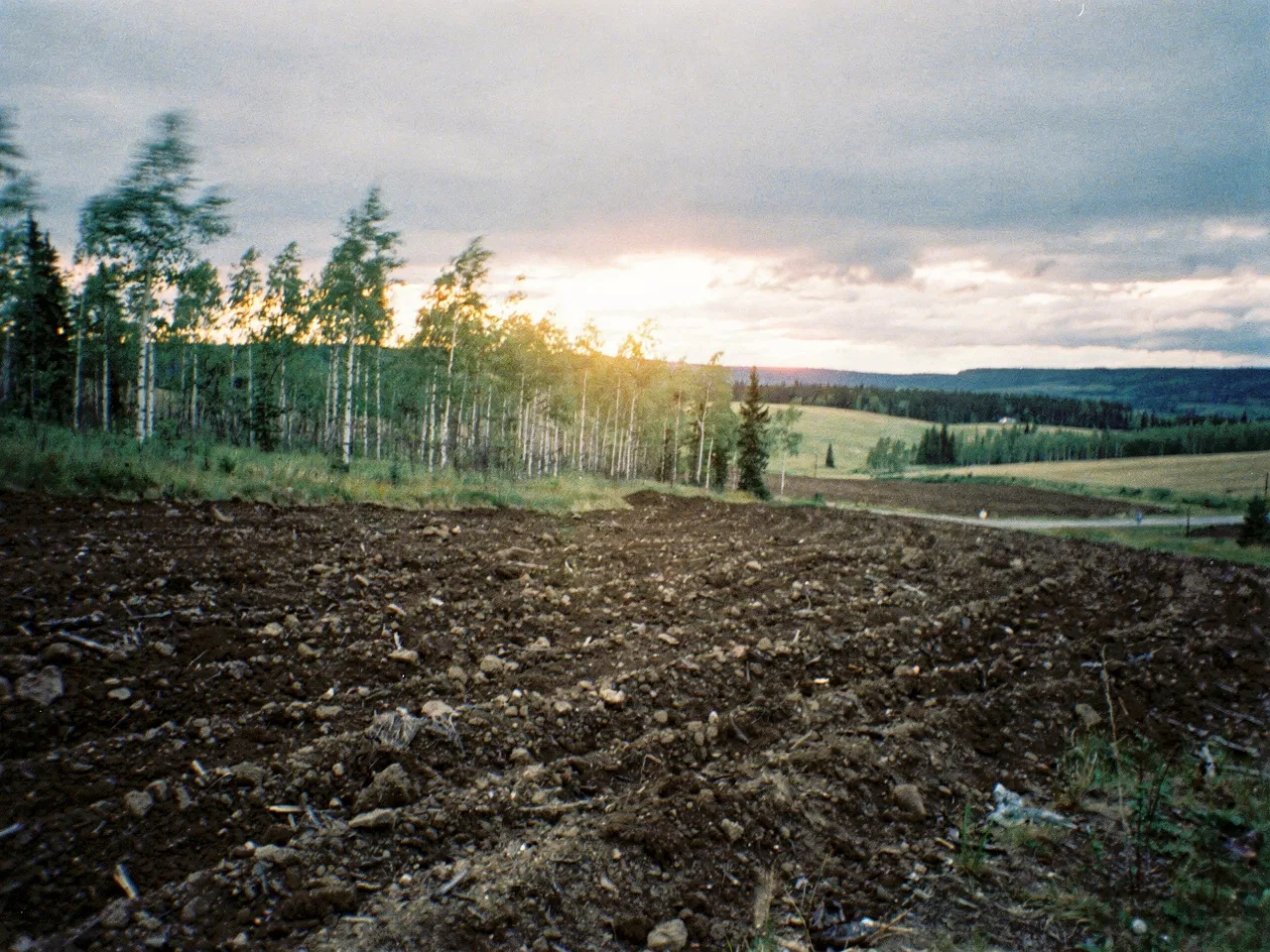
On a reclaimed site, what grows back depends on what is under it. A lease pad, a pipeline work area, or a camp site spends years carrying heavy equipment, and the ground underneath is packed hard. Putting the topsoil back over that ground is the last earthwork step, and it is easy to get wrong.
This guide covers the general practice. Your reclamation plan, your consultant, and, on agricultural land, the landowner and the Agricultural Land Reserve requirements set the specifics for your site.
Why decompaction comes first
Heavy traffic compacts subsoil. Roots cannot push through it, and water sits on top of it instead of soaking in. Topsoil laid over compacted subsoil can look fine for a season and then struggle, with poor growth and wet patches where water has nowhere to go.
Decompaction loosens the subsoil before the topsoil goes back. It is usually done with a ripper pulled through the subsoil to the depth the plan calls for, often in more than one direction. The surface is then shaped so it matches the land around the site and drains the way it did.
Replacing the topsoil
Topsoil salvaged at construction is a site’s most valuable material. It holds the seed bank, the organic matter, and most of what makes the ground productive. Replacing it well comes down to a few habits:
- Keep it separate. Topsoil goes back on top, without being mixed into the subsoil underneath it.
- Spread it evenly. The plan sets the depth. Thin spots and deep piles both show up later in how the site grows.
- Limit the traffic on it. Every pass of a machine over replaced topsoil compacts it again, so the work is planned to keep passes to a minimum.
- Mind the weather. Wet soil compacts and smears easily. Work is timed for when the soil is dry enough to handle.
- Leave the surface rough. A slightly rough surface catches seed and water better than a smooth, packed one.
When a site is short on topsoil
Some sites come up short. Stockpiles erode, blow away, or get mixed over the years, and older sites were not always salvaged well to begin with. Where a site is short, imported topsoil can make up the difference.
Imported material has to suit the site. Your consultant should confirm that it matches the reclamation plan and is acceptable for the land use, and on agricultural land the landowner will want a say. Weed content matters too, since a load that brings weeds with it creates a new problem.
Holding it in place
Freshly replaced topsoil is vulnerable until vegetation takes hold. On slopes and near watercourses, erosion-control earthworks keep it where it was put: shaping the surface to slow water, and placing controls the plan specifies across the slope.
What Reg Norman Trucking does
We do the decompaction, recontouring, and topsoil replacement on lease, well-site, and pipeline reclamation across northeast BC. We supply screened topsoil and clean fill from our own pits where a site is short, for your consultant to approve against the plan. Seeding and revegetation follow, done by the specialist your project has chosen.
Enquire about reclamation earthworks, or see our reclamation and remediation earthworks.
Talk through your project.
Tell dispatch the location, the work, and your preferred timing. We can work through the details together.
Send an enquiry